


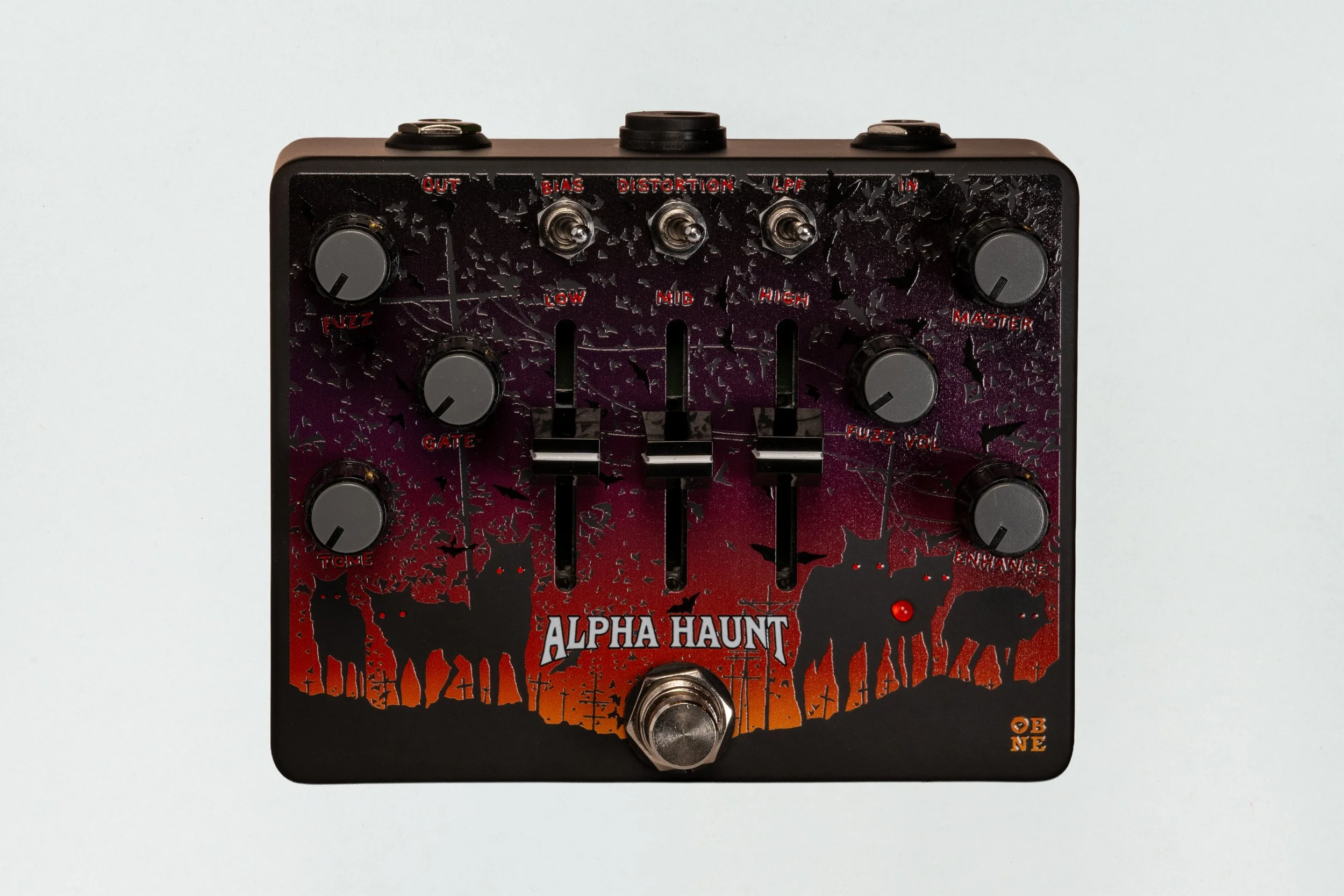
Alpha Haunt is the expanded version of our Haunt silicon high gain gated fuzz. It is rich in control and versatility, allowing both softer and gnarlier sounds than the original, from smooth overdrive to crumbling fuzz. With a blendable Enhance section and three band EQ, this may just be the most versatile fuzz on your board.
Controls include:
Fuzz to set the gain of the fuzz
Distortion toggle to set the Fuzz range
Gate to set the compression of the fuzz, also increasing the amount of fuzz as it’s turned up
Bias toggle to further control the fuzz’s gating character
Tone to set the main voice of the fuzz
LPF toggle to set the range of Tone
Fuzz Vol to set the output volume of the fuzz
Enhance to set the volume of an additional boost circuit to blend in full-frequency un-fuzzed sound alongside the fuzz
Master to set the overall volume
Low, Mid, and High to set the overall EQ
Soft-touch bypass footswitch for true bypass and minimal switch noise
For more information, see the Alpha Haunt manual available here.
Requires 9V DC center negative 2.1mm jack power supply capable of 40mA (not included).
The art of Alpha Haunt is by Daniel Danger.
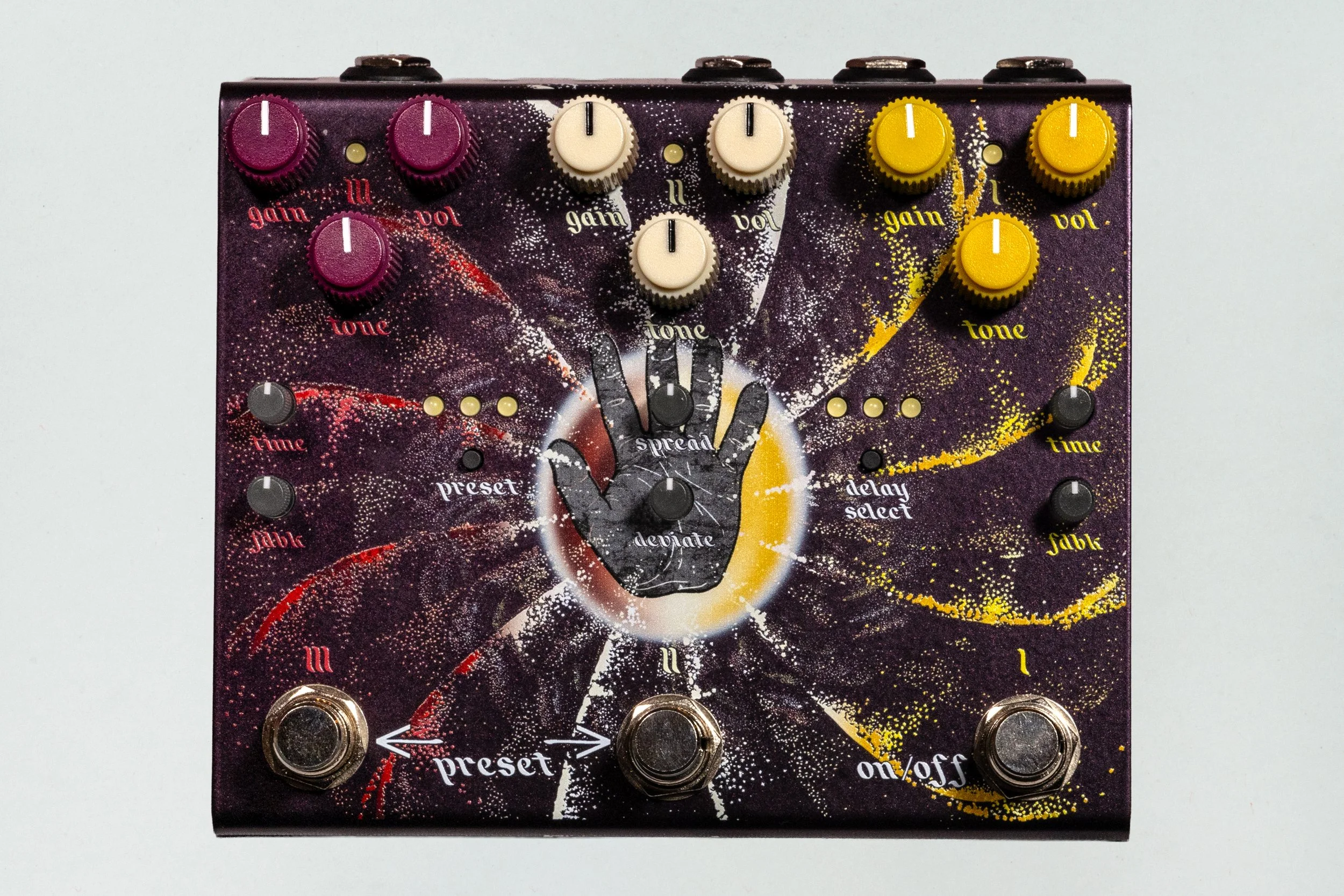
Beam Splitter takes one signal and makes three copies of it, taking three different overdrive voices and sending two of them through individual delay lines. It is specifically our way of creating a huge sound out of a regular one. Output can be kept in parallel mono, spread out in stereo, or further split into three outputs (what we call “trereo”). While the goal is singular bigness, you can create classic drives, flangers, lofi vibratos, trailing slapback echoes, and more using the full control set.
Beam Splitter V2 has:
Buffered trails or true bypass switching
Presets
Expression control over every knob
MIDI control over everything in the pedal
Mono or stereo input (stereo will be collapsed to mono when the pedal is on), and mono, stereo, or trereo output
Controls include:
Gain, Volume, and Tone to shape the amount of distortion, overall volume, and brightness of each drive section
Time and Feedback controls for each delay to set the timing (up to 211mS) and the amount of resonance or decay
Deviate to randomly vary the delay time, giving a more natural feel and chorus effect
Spread to set the amount of stereo spread
Delay Select to choose which drives are delayed
For more information, see the Beam Splitter V2 manual available here.
Requires 9V DC center negative 2.1mm jack power supply capable of 350mA (not included).
The art of Beam Splitter is by Dustin Charles.
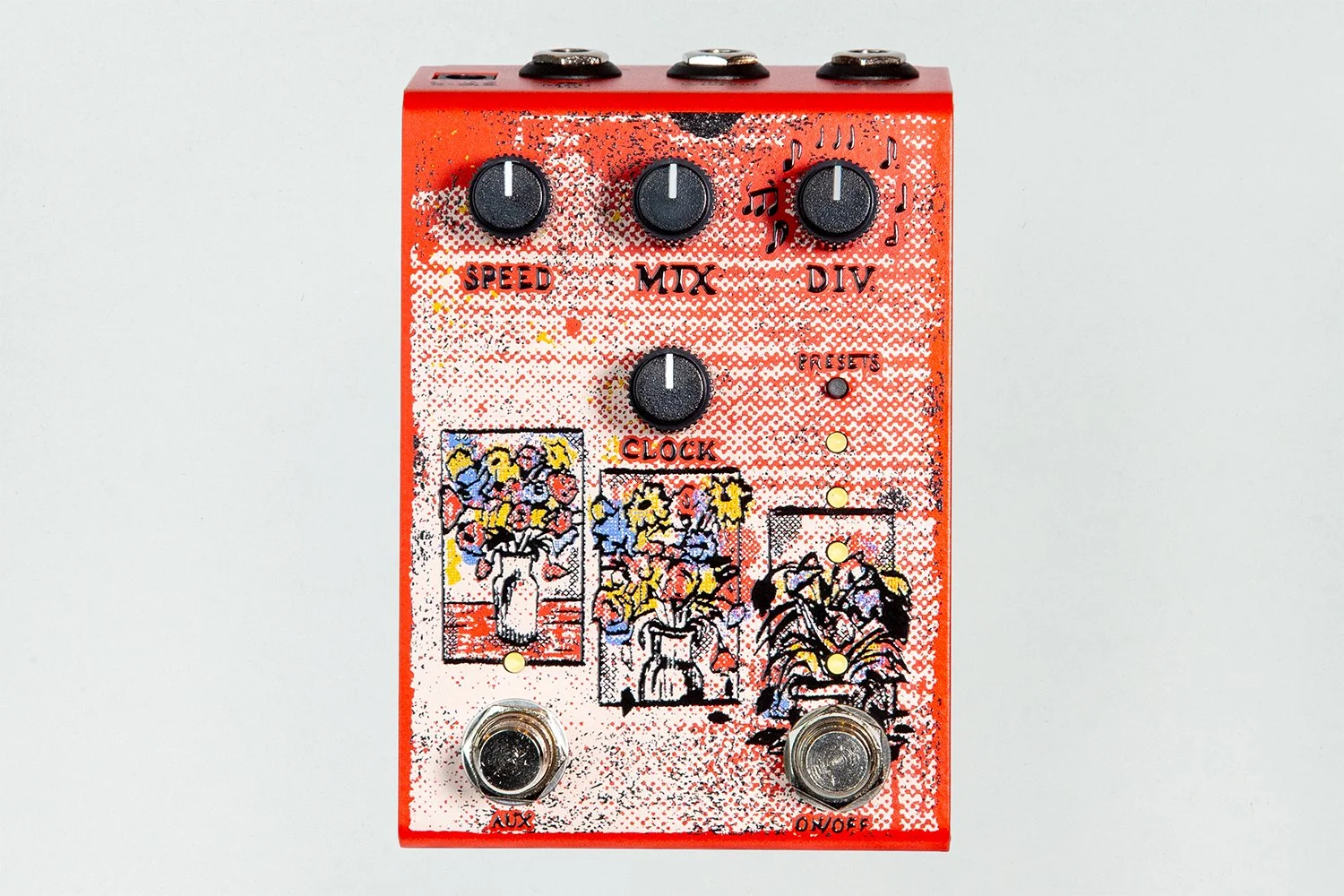
Setback is a reverse delay pedal. In the past, we’ve made what we like to call textural reverse pedals, a lineage that goes from Rever to Minim to BL-44 and a little bit into Parting. With Setback, we wanted to create our ideal reverse: something that can be textural and off on its own timing or totally tempo synced; gritty and characterful or clean and tidy; intuitive and controlled and yet fun and surprising. And we wanted to do all of that in the smallest form factor possible.
Setback has:
Stereo in and out with analog dry through
Buffered trails or true bypass switching
Presets
Expression control over every knob
MIDI control over everything in the pedal, including MIDI clock in for external syncing
Controls
Mix to set the blend of wet and dry signals
Speed to change the playback speed of the reverse, creating pitch shifting effects
Div to set subdivisions of the reverse timing
Clock to adjust the sample rate of the reverse, changing both the delay time and the signal fidelity
Aux switch for tap tempo and held feedback, or preset switching
Alt controls for volume and direct time manipulation
Soft-touch On/Off footswitch with relay switching for minimal switch noise
For more information, see the Setback manual available here.
Requires 9V DC center negative 2.1mm jack power supply capable of 350mA (not included).
Dimensions: 3.25” (width) x 5” (height) x 2” (depth)
The art of Setback is by John Salame
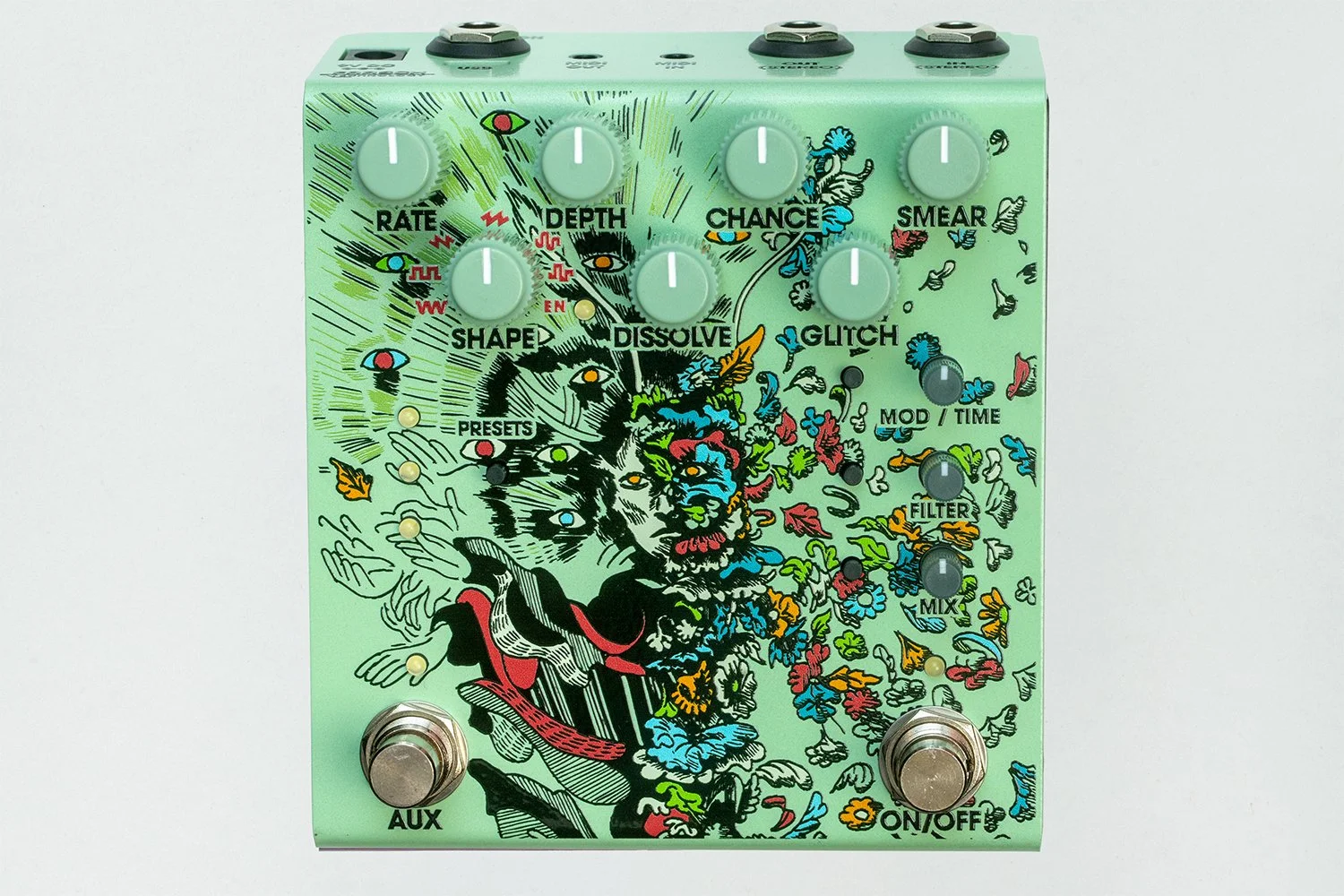
Parting is a box of pleasant surprises. Moments of chance will give bursts of a glitch delay that can smear into a reverb, modulated by tremolo or vibrato, filtered, and, most importantly, dissolved into lofi aliasing or stretched out reverse. All of this may jump around in halves and octaves of itself - it’s up to you and Parting, together.
Dimensions: 4.25” (width) x 5” (height) x 2” (depth).
Haunt is a high-gain gated fuzz. From smoother almost overdriving sounds to squishy splutters, the silicon architecture gives a wide tonal palette. All this, and it still plays well after a buffer!
Controls include:
Volume, Tone, and Fuzz to set the overall voice of the fuzz
Gate to control how compressed the fuzz is, interactive with Fuzz
Mix to blend in clean tone and give clarity
Low and Range switches to further shape the fuzz character
Soft-touch bypass footswitch for true bypass and minimal switch noise
For more information, see the Haunt manual available here.
Requires 9V DC center negative 2.1mm jack power supply capable of 30mA (not included).
The art of Haunt is by Daniel Danger.
http://www.tinymediaempire.com/